

Healthcare HR Software for Australian Clinics
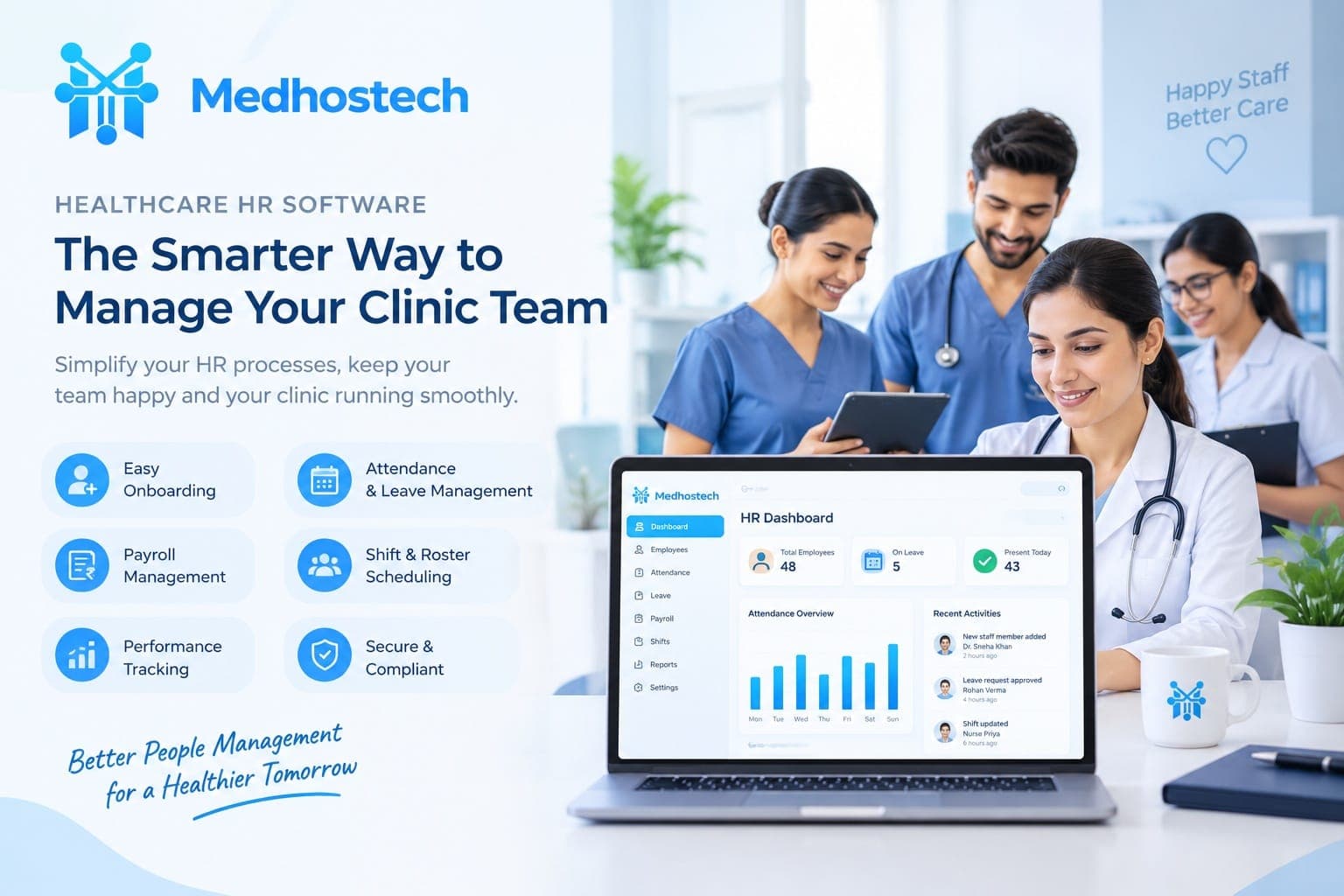
Discover how healthcare HR software helps Australian clinics simplify staff management, streamline attendance tracking and organise employee records. Learn how digital HR solutions can reduce administrative workloads and improve workforce efficiency.
Medhostech Editorial
Healthcare IT & software insights
How Can Healthcare HR Software Simplify Staff Management in Australian Clinics?
Smarter Workforce Management for More Organised Healthcare Operations
Running a healthcare clinic involves more than providing quality patient care. Behind every successful practice is a team of professionals whose attendance, schedules, responsibilities and employee records need regular management.
For Australian clinics, handling these responsibilities manually can create unnecessary administrative pressure. Maintaining attendance sheets, coordinating shifts, updating employee details and managing leave requests can consume valuable time.
This is where digital HR solutions can make a difference. Healthcare HR software Australia clinics use can help organise workforce-related activities, reduce repetitive administration and give managers better control over daily staff operations.
Why Is Staff Management Challenging for Australian Clinics?
Healthcare teams often work across different shifts, departments and responsibilities. Managing these activities without a structured system can become complicated, particularly as a clinic expands.
Some common challenges include:
Manual attendance tracking: Maintaining employee attendance through spreadsheets or paper registers takes additional effort.
Shift coordination: Managing staff availability and schedules can become difficult when information is scattered.
Employee record management: Finding updated employee details may require checking multiple documents.
Leave administration: Tracking leave requests and employee availability can create coordination issues.
Administrative workload: Repeated data entry and manual reporting leave managers with less time for other responsibilities.
These challenges can affect the overall efficiency of a healthcare business. A more organised approach to workforce management helps clinics handle these responsibilities effectively.
How Can Healthcare HR Software Simplify Staff Management?
Digital HR systems bring important employee-related activities into an organised environment. Depending on the platform's capabilities, they can support several areas of clinic administration.
1. Simplifies Employee Attendance Tracking
Keeping track of employee attendance is essential for maintaining an organised healthcare workforce. Digital attendance management helps managers maintain employee records without depending entirely on manual registers. It can also make attendance information easier to review, reducing the time spent collecting and updating records.
Maintaining accurate working-hour records is also important for Australian employers. The Australian Government's employee records guidance explains the record-keeping requirements for employee hours, leave and payment information.
2. Makes Staff Scheduling Easier
Healthcare clinics need to coordinate staff availability and working schedules to maintain smooth operations.
A digital HR solution can help managers organise shifts, review employee availability and maintain clearer workforce schedules.
This improves visibility and helps reduce confusion when managing daily responsibilities.
3. Keeps Employee Information Organised
Employee information is an important part of healthcare administration. Details such as contact information, job roles, employment records and other relevant documents need to remain organised.
HR management software Australia healthcare businesses adopt can provide a centralised environment for maintaining employee information, making records easier for authorised managers to access and update.
Employee information may include personal details, employment conditions, salary information and leave records. The Office of the Australian Information Commissioner (OAIC) explains how the employee records exemption under the Privacy Act applies in certain circumstances.
4. Reduces Repetitive Administrative Tasks
Manual HR processes often involve repeating the same activities, such as updating attendance sheets, checking leave records and preparing employee reports.
Digital systems can simplify these recurring responsibilities by organising information and reducing duplicate data entry.
This allows clinic administrators to spend less time managing paperwork and more time supporting essential business operations.
5. Improves Workforce Visibility
Clinic owners and managers need a clear understanding of their workforce to make informed operational decisions.
With organised employee information, attendance records and scheduling details, management teams can gain better visibility into staff-related activities.
This can support more structured workforce planning and help clinics identify administrative gaps.
What Should Australian Clinics Look for in HR Management Software?
Choosing the right software requires understanding the actual needs of the clinic.
Before investing in a solution, healthcare businesses should consider:
Attendance management: Does the system support reliable employee attendance records?
Staff scheduling: Can managers organise shifts and employee availability?
Employee records: Does it provide a structured way to maintain staff information?
Reporting: Can managers review useful workforce information?
Data security: Does the provider offer appropriate access controls and data protection measures?
Scalability: Can the solution support the clinic as its workforce grows?
The right system should simplify existing processes rather than introduce unnecessary complexity.
How Does Medhostech Support Healthcare Staff Management?
Medhostech offers a SaaS-based business management platform designed to help healthcare businesses organise their operational activities.
Its management approach focuses on simplifying business processes, supporting staff-related administration and improving operational visibility.
For healthcare clinics looking to move away from scattered employee records and manual administrative processes, a centralised management platform can help create a more organised working environment.
Explore Medhostech to learn how its business management solutions can support your healthcare operations.
Website: https://medhostech.com/
Frequently Asked Questions (FAQs)
1. What is healthcare HR software?
Healthcare HR software is a digital solution that helps healthcare organisations manage employee information, attendance, staff schedules and other workforce-related administrative activities.
2. Why do Australian clinics need HR management software?
Australian clinics can use HR management software to organise employee records, simplify attendance tracking, coordinate staff schedules and reduce repetitive administrative work.
3. Can HR software help clinics manage employee attendance?
Yes. Depending on its features, HR software can maintain digital attendance records, making it easier for managers to monitor and review employee attendance.
4. What is the difference between HR software and clinic management software?
HR software primarily focuses on employee-related activities, including attendance, workforce administration and staff records. Clinic management software generally covers broader business and operational activities within a healthcare practice.
5. Is healthcare HR software suitable for small clinics?
Yes. Small clinics can benefit from organised employee records, simplified attendance management and more structured workforce administration, particularly as their teams grow.
References & Further Reading
Final Thought
Managing healthcare staff should not mean spending hours maintaining spreadsheets, checking attendance registers or searching for employee information.
With the right digital tools, Australian clinics can simplify workforce administration, improve coordination and create more organised daily operations.
Medhostech – Take a breath. We've got your business management covered.