
How Healthcare Management Software Helps Clinics in Mississippi Improve Daily Operations
Discover how healthcare management software helps clinics in Mississippi improve administration, HR management, medical billing, and daily operations.
Medhostech Editorial
Healthcare IT & software insights
Discover how digital solutions help Mississippi clinics streamline administration, simplify billing, manage healthcare staff, and improve overall operational efficiency.
Healthcare clinics in Mississippi manage several responsibilities every day, from handling patient information and coordinating staff to managing appointments, billing, and administrative tasks. When these activities are handled through separate systems or manual processes, it can become difficult to maintain an organised workflow.
As healthcare practices grow, managing daily operations efficiently becomes just as important as delivering quality patient care. This is where healthcare management software can make a difference. It helps clinics bring essential administrative activities together, reduce repetitive work, and improve coordination between different departments.
For clinics looking to improve productivity and manage their operations more effectively, adopting the right healthcare management software in Mississippi can be a practical step towards better business management.
What Is Healthcare Management Software?
Healthcare management software is a digital solution designed to help healthcare organisations manage their administrative and operational activities through a centralised system.
Depending on the platform and its features, it can support:
Patient and customer information management
Staff and employee management
Appointment and schedule coordination
Billing and payment management
Administrative reporting
Daily operational monitoring
Instead of depending on multiple spreadsheets, paper records, and disconnected tools, clinics can use a centralised platform to organise their everyday processes.
It is important to understand that healthcare management software and Electronic Health Record (EHR) systems are not necessarily the same. EHR systems focus on clinical records, while management software may focus more broadly on administrative and business operations. Clinics should select a solution based on their actual requirements.
1. Simplifies Daily Clinic Administration
Administrative work takes up a considerable amount of time in healthcare clinics. Employees may need to update patient details, maintain records, coordinate schedules, prepare reports, and manage routine office activities. When these tasks are performed manually, mistakes and delays can occur.
A suitable clinic management software in Mississippi can help organise administrative information in one place. Staff members can access relevant details more efficiently, reducing the need to switch between different files and systems.
For example, a clinic administrator can use a centralised platform to manage operational information and monitor daily activities without relying entirely on paper-based processes.
This allows employees to spend less time on repetitive administrative work and more time supporting patients and clinic operations.
2. Improves Employee and Staff Management
Healthcare clinics depend on doctors, nurses, receptionists, administrative employees, and support staff. Coordinating different employees, working hours, attendance, and responsibilities can become challenging, especially as a clinic expands.
This is where HRMS software for healthcare clinics in Mississippi can be useful.
An HRMS (Human Resource Management System) helps organisations manage employee-related activities through a digital platform.
Depending on the available features, it may support:
Employee information management
Attendance tracking
Staff scheduling
Leave management
Employee performance monitoring
HR reporting
For example, clinic administrators can use employee management tools to monitor attendance and organise staff information more efficiently.
Better workforce coordination helps clinics maintain organised operations and reduce the administrative burden on HR teams.
3. Makes Medical Billing and Financial Management Easier
Billing is another important part of clinic administration. Healthcare providers need an organised process for generating bills, recording payments, tracking outstanding amounts, and maintaining financial information.
Manual billing processes can lead to calculation errors, missing information, and delays in financial reporting.
Using medical billing software in Mississippi can help clinics organise billing-related activities digitally.
Depending on the software's capabilities, it may offer:
Digital invoice generation
Payment tracking
Billing records management
Financial summaries
Transaction reporting
For instance, a clinic can maintain organised billing information and review payment records more easily. This improves financial visibility and helps administrators monitor the clinic's financial activities.
However, clinics should verify whether a software solution supports their specific billing requirements, including insurance claims, coding, and reimbursement workflows, before choosing it.
4. Supports Better Coordination Between Departments
In many clinics, administrative, HR, and billing activities are connected. A change in staff availability may affect daily schedules, while incomplete billing information can create additional administrative work. When departments use separate tools, sharing information becomes difficult.
A centralised healthcare management platform can help bring different operational functions together. This makes it easier for authorised team members to access relevant information and coordinate their responsibilities.
For example, administrators can monitor staff-related information, review billing activities, and manage other operational tasks through a connected system, depending on the platform's features.
This is one of the key advantages of choosing Healthcare management software Mississippi clinics can use to improve operational visibility and coordination.
5. Reduces Manual Work and Saves Administrative Time
Time is valuable in a busy healthcare environment. Employees should not have to spend unnecessary hours preparing spreadsheets, updating multiple records, or searching through paperwork.
Automation can help reduce repetitive administrative activities.
For example, software may automate invoice generation, attendance calculations, notifications, or report preparation, depending on its capabilities.
Reducing manual work can help clinics:
Minimise repetitive tasks
Improve information organisation
Reduce avoidable administrative errors
Maintain consistent processes
Improve employee productivity
Although software cannot replace human decision-making, it can make routine administrative responsibilities easier to manage.
6. Helps Clinic Owners Monitor Business Performance
Clinic owners and administrators need to understand how their operations are performing. Without organised information, it can be difficult to identify administrative delays, monitor expenses, or evaluate staff productivity.
Healthcare management software with reporting and dashboard features can provide a clearer overview of important business activities.
For example, administrators may be able to review billing summaries, employee attendance, operational reports, and other available business information.
These insights can support better planning and help clinic owners identify areas that need improvement.
Before selecting a platform, clinics should check which reports and dashboard features are included and whether they match their operational needs.
How to Choose the Right Healthcare Management Software in Mississippi
Not every clinic requires the same software features. A small independent practice may have different requirements from a multi-location healthcare organisation.
Before investing in a solution, consider the following factors:
Understand your requirements: Identify the administrative, HR, and billing tasks that need improvement.
Check available features: Make sure the platform supports the functions your clinic needs.
Review data security: Ask about access controls, data protection, backups, and applicable healthcare privacy requirements.
Consider ease of use: Choose software that employees can learn and use without unnecessary complications.
Evaluate scalability: Select a solution that can support your clinic as its operations expand.
The right software should simplify existing processes rather than introduce additional complexity.
How Medhostech Supports Business Management
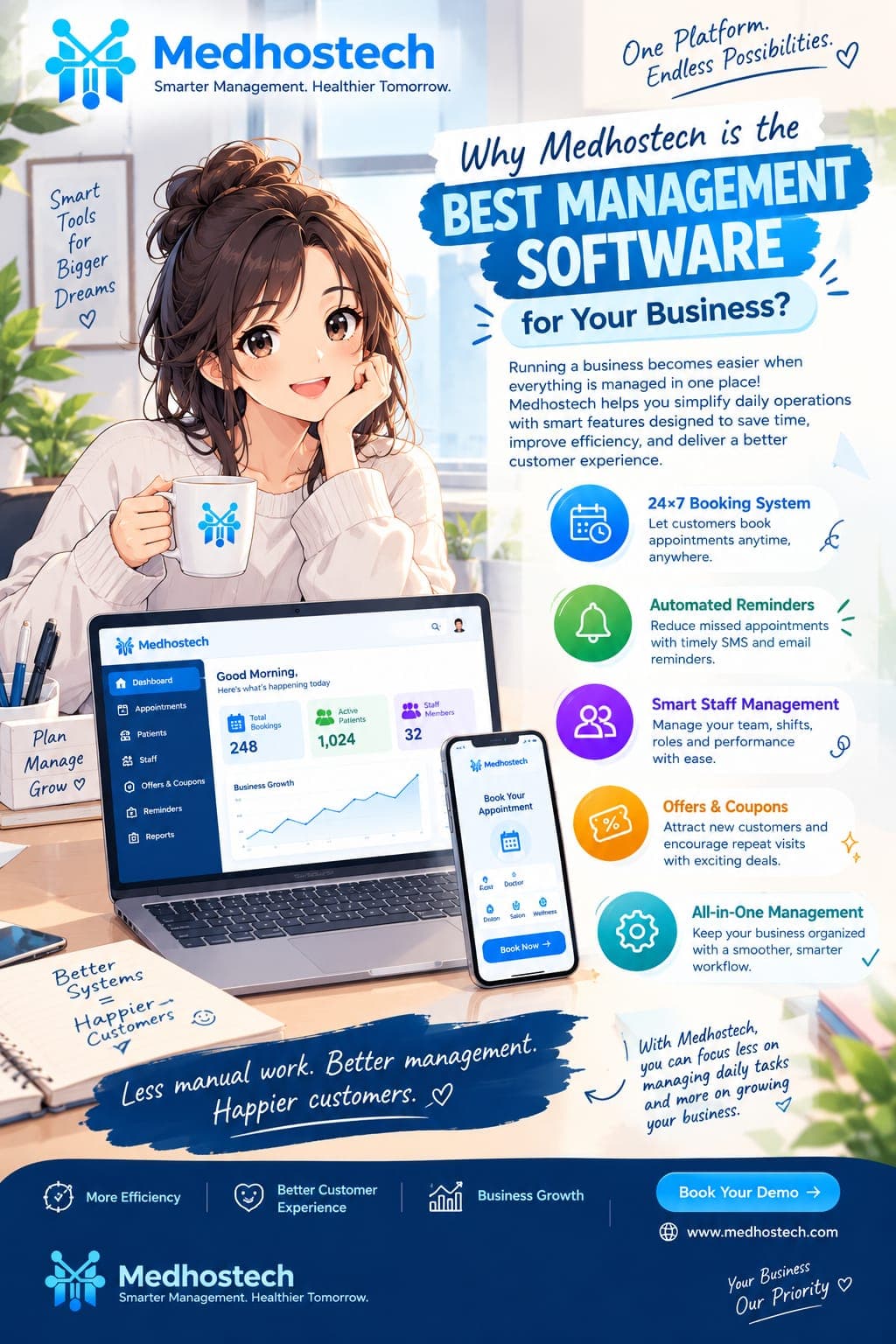
Medhostech offers SaaS-based business management solutions designed to help organisations manage important operational activities through digital platforms.
For healthcare businesses, a centralised management approach can help organise administrative workflows, employee management, and billing-related activities, depending on the features available in the selected solution.
By bringing essential business functions into a more organised digital environment, Medhostech aims to help businesses reduce manual effort and improve operational coordination.
Healthcare clinics evaluating management platforms can explore Medhostech to understand whether its available features align with their business requirements.
Frequently Asked Questions (FAQs)
1. What is healthcare management software used for in clinics?
Healthcare management software helps clinics organise administrative activities such as staff management, billing, scheduling, reporting, and other operational tasks. Its exact capabilities depend on the software provider.
2. How can clinic management software in Mississippi improve daily operations?
It can help clinics centralise administrative information, reduce repetitive manual work, improve staff coordination, and organise billing activities. This can make everyday operations more efficient.
3. Why do healthcare clinics need HRMS software?
HRMS software helps clinics manage employee information, attendance, leave records, scheduling, and other HR activities. It reduces manual HR work and supports better workforce management.
4. What are the benefits of medical billing software in Mississippi?
Medical billing software can help clinics generate invoices, maintain payment records, track transactions, and organise financial information. Clinics should check whether the solution supports their specific insurance and reimbursement requirements.
5. How should a clinic choose the right healthcare management software?
Clinics should evaluate their operational needs, software features, ease of use, security measures, reporting capabilities, scalability, and customer support before making a decision.
Conclusion
Managing a healthcare clinic involves much more than providing medical services. Administrative tasks, employee coordination, billing, and financial monitoring all contribute to the smooth functioning of a clinic.
Medhostech aims to simplify business management by bringing essential operational functions together through digital solutions. With features designed to support administrative workflows, employee management, and billing activities, Medhostech can help healthcare businesses work in a more organised and efficient way.
As healthcare operations continue to evolve, choosing the right technology is an important step towards building a more streamlined and productive clinic. Explore Medhostech to discover how its management solutions can support your business operations.