
Healthcare Management Software in USA: Simplifying Clinic Operations
Discover how healthcare management software, clinic management software, and staff management software can help healthcare facilities reduce administrative burdens, streamline daily workflows, and improve operational efficiency across the USA.
Medhostech Editorial
Healthcare IT & software insights
From Administrative Chaos to Organized Care: A Smarter Approach to Clinic Management
A healthcare facility can have skilled doctors, dedicated nurses, and experienced administrative staff and still struggle with daily operations. The reason is not always a lack of people or resources. Sometimes, the real problem is how work gets organized.
From tracking employee attendance to coordinating daily responsibilities and maintaining patient records, administrative tasks can consume hours that healthcare professionals could spend on more valuable work.
For clinics across the United States, improving operational efficiency means looking beyond patient care alone. It also means building better systems for managing information, people, and everyday responsibilities.
This is where modern healthcare management technology can make a difference.
Why Do Healthcare Facilities Struggle With Daily Operations?
Running a clinic involves much more than consultations and treatments. Behind every patient interaction is a network of administrative activities that must work together.
When these activities depend on disconnected tools, manual records, or repeated communication, small inefficiencies can become daily obstacles.
Consider a typical working day at a busy clinic:
A receptionist switches between systems to find information.
An administrator spends time checking employee attendance.
A manager follows up with staff to confirm task completion.
Important updates get delayed because information is spread across different channels.
Clinic leadership struggles to understand where operational time is being lost.
Individually, these issues may seem manageable. Together, they can interrupt workflows, increase the administrative burden, and make consistent service delivery more difficult.
The solution is not necessarily to hire more people. In some cases, improving the systems they already use can be a more practical starting point.
How Healthcare Management Software in the USA Supports Better Operations
Healthcare facilities need reliable processes to coordinate their daily activities. Healthcare management software in the USA can help organizations move away from fragmented administrative practices toward more organized digital workflows.
Depending on the platform and its capabilities, this type of software may support activities such as:
1. Centralized operational information
When relevant information is scattered across spreadsheets, paper files, and separate applications, employees may spend unnecessary time locating it. Centralized systems can make authorized information easier to access and manage.
2. More organized daily workflows
Digital processes can help teams coordinate responsibilities, track operational activities, and reduce avoidable manual steps. This gives managers better visibility into routine work.
3. Improved administrative coordination
When employees and managers work with consistent information, communication becomes easier to organize. Teams can spend less time resolving avoidable confusion and more time completing their responsibilities.
4. Better visibility for decision-makers
Operational reports and dashboards, when available, can help managers identify recurring delays, workload imbalances, and areas that may need improvement.
The important point is that technology should solve specific operational problems. Choosing software based on a long feature list alone may not address the challenges a clinic experiences every day.
Clinic Management Software: Bringing Daily Activities Into Better Alignment
A clinic's efficiency depends on how well its different functions work together.
Clinic management software can help organize administrative activities within a digital environment. Depending on the solution, this may include patient information management, appointment coordination, billing workflows, reporting, and other operational functions.
For example, imagine a clinic where staff members regularly contact one another to confirm routine information. If the relevant details are available through an appropriately configured system, employees may spend less time searching for updates.
Similarly, clinic managers can benefit from having a clearer view of recurring administrative tasks instead of relying entirely on verbal updates.
However, software alone does not automatically create efficient operations. Clinics also need clear procedures, appropriate staff training, and regular reviews of how their systems are being used.
When technology and well-defined processes work together, healthcare organizations have a stronger foundation for improving everyday efficiency.
Why Staff Management Software Matters in Healthcare
Healthcare employees work across different roles, schedules, and responsibilities. Managing these moving parts requires accurate information and consistent coordination.
Without a structured process, employee attendance, scheduling, leave requests, and staff records can become time-consuming responsibilities for administrators.
Staff management software can help organize these activities, depending on the features offered by the selected platform.
1. More organized attendance tracking
Digital attendance records can make it easier for authorized managers to review employee attendance and identify discrepancies that need attention.
2. Clearer staff scheduling
Organized scheduling tools can help managers understand staff availability and plan responsibilities more effectively. This is particularly useful when a facility has multiple teams or shifts.
3. Easier access to employee information
Maintaining employee details in a structured system can reduce dependence on scattered spreadsheets and physical documents.
4. Less repetitive administrative work
When routine processes are digitized appropriately, administrators may spend less time collecting the same information from multiple employees.
5. Better operational visibility
Relevant reports can help managers understand attendance patterns, staffing requirements, and recurring administrative issues.
These benefits depend on the software's actual capabilities, the accuracy of its data, and how consistently the organization uses it.
What Should Healthcare Providers Look for When Choosing Software?
Selecting the right technology requires understanding the problems that need to be solved first.
Healthcare providers evaluating digital management solutions should consider the following factors.
Ease of use: Employees should be able to learn the system without unnecessary complexity.
Relevant features: The platform should support the organization's actual operational requirements rather than offering features that will rarely be used.
Data security and privacy: Healthcare organizations should assess access controls, data handling practices, contractual responsibilities, and applicable privacy requirements, including HIPAA where relevant.
Integration requirements: Consider whether the software works with existing systems and whether additional integrations will be necessary.
Reporting capabilities: Useful reports should help decision-makers understand operations and identify areas for improvement.
Scalability: The solution should accommodate changing organizational needs without creating unnecessary administrative complexity.
Vendor support: Training, onboarding, troubleshooting, and ongoing assistance can influence how successfully a team adopts new technology.
Before making a decision, clinics should map their existing workflows, identify their most persistent bottlenecks, and evaluate software against those specific requirements.
How Medhostech Fits Into the Goal of Simplifying Business Management
Improving healthcare operations is not simply about adding another digital tool. It is about making everyday management more organized and less dependent on repetitive manual coordination.
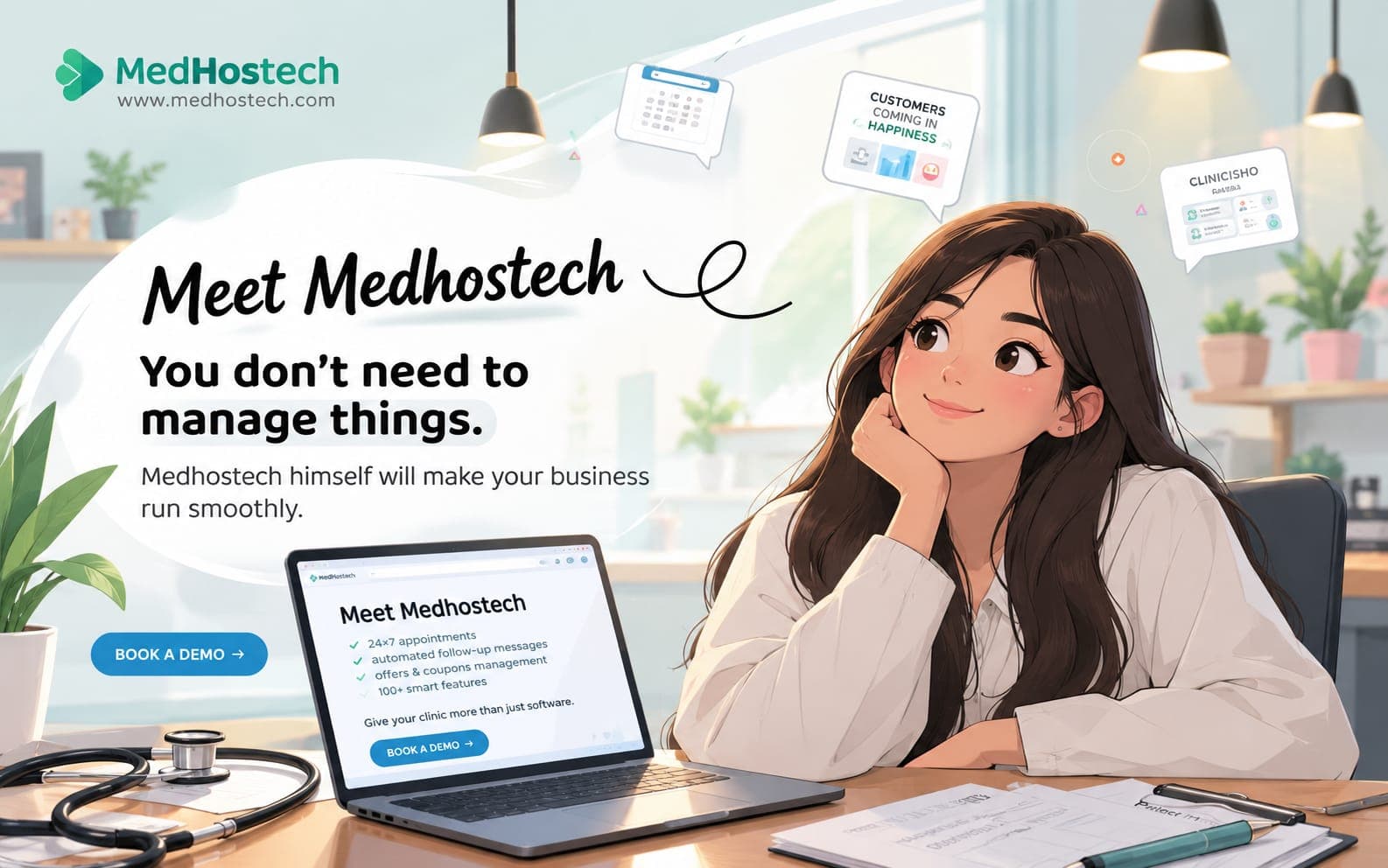
Medhostech provides business management software designed to support organizations in managing their operations more systematically. For healthcare providers evaluating management technology, the relevant starting point is identifying which administrative processes need greater visibility, consistency, or organization.
The next step is to assess the available Medhostech features against those requirements, including the workflows the clinic wants to improve.
Rather than expecting software to solve every operational challenge independently, healthcare organizations can approach implementation as a combination of appropriate technology, clear processes, and staff adoption.
This creates a more realistic path toward reducing avoidable administrative effort and building more manageable daily operations.
The Future of Clinic Operations Starts With Better Systems
Healthcare teams cannot eliminate every delay or administrative responsibility. They can, however, examine how routine work is organized and identify opportunities to make it more efficient.
Healthcare management software in the USA, clinic management software, and staff management software can each contribute to better-organized operations when selected according to a facility's needs.
The goal is not to replace the human side of healthcare with technology. It is to give healthcare professionals better systems for handling the work surrounding patient care.
Because when administrative processes become easier to manage, healthcare teams have a stronger opportunity to focus on the responsibilities that matter most.
Ready to explore a more organized approach to business management?
Discover Medhostech at www.medhostech.com and explore how its solutions may fit your organization's operational needs.