

HIPAA-Compliant Clinic Management Software in the USA
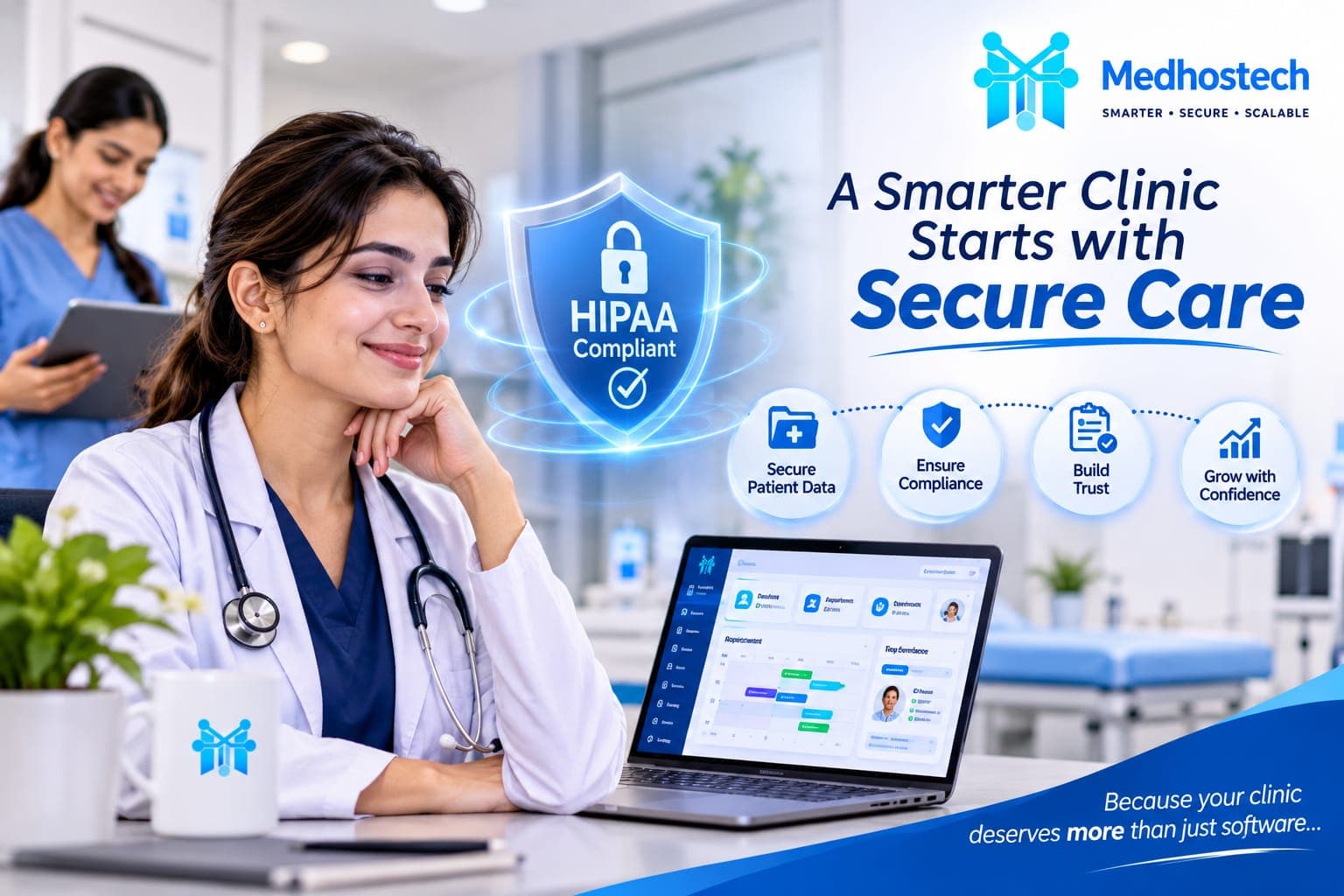
Discover how HIPAA-compliant clinic management software helps US healthcare clinics protect patient information, improve security, and simplify daily operations.
Medhostech Editorial
Healthcare IT & software insights
What Is HIPAA-Compliant Clinic Management Software and Why Do US Healthcare Clinics Need It?
Healthcare clinics in the United States manage sensitive patient information every day, including medical histories, diagnoses, contact details, prescriptions, and billing records. Protecting this information is essential for maintaining patient trust and meeting federal privacy requirements.
This is where HIPAA-compliant clinic management software becomes important. It helps healthcare providers organize administrative activities while supporting the safeguards needed to protect electronic patient information. For US clinics, choosing the right software can improve operational efficiency and strengthen data security.
What Is HIPAA-Compliant Clinic Management Software?
HIPAA-compliant clinic management software is a digital solution designed to help healthcare practices manage daily operations while supporting compliance with the Health Insurance Portability and Accountability Act (HIPAA).
It can bring different clinic activities into one system, including patient information management, appointment scheduling, billing, employee management, and administrative reporting.
However, using software alone does not make a clinic HIPAA compliant. Clinics must also implement appropriate policies, staff training, access controls, and security procedures.
Why Do US Healthcare Clinics Need HIPAA-Compliant Software?
Healthcare providers handle Protected Health Information (PHI), which requires appropriate privacy and security safeguards.
Here are five important reasons clinics should consider secure management software.
1. Protect Sensitive Patient Information
Patient records contain confidential medical and personal details. HIPAA-compliant healthcare software should support safeguards such as role-based access, secure authentication, and appropriate data protection measures.
These controls help prevent unauthorized individuals from accessing sensitive information.
2. Improve Patient Record Management
Managing patient information through disconnected systems can create administrative challenges.
HIPAA-compliant medical practice software can help authorized staff organize patient records, consultation details, and medical histories more efficiently while maintaining appropriate access restrictions.
3. Strengthen Healthcare Data Security
Healthcare data security requires more than passwords. Clinics should evaluate software for encryption, access monitoring, audit controls, backup procedures, and security risk management capabilities.
Reliable healthcare data security software can support these efforts by helping clinics protect sensitive information and monitor access to important records.
4. Simplify Daily Clinic Operations
Healthcare professionals need time to focus on patient care rather than repetitive administrative tasks.
Clinic management software in the USA can help clinics coordinate appointments, billing, staff activities, patient records, and reporting through an integrated platform.
This can reduce manual work and improve communication between administrative teams.
5. Support Flexible Cloud-Based Operations
Cloud technology allows authorized users to access business information from different locations, depending on permissions and security configurations.
Cloud-based clinic management software can support centralized information management, automated updates, and data backup capabilities. Clinics should verify the provider's security controls, business associate agreement (BAA), and HIPAA responsibilities before adopting a cloud solution.
What Features Should Clinics Look for in HIPAA-Compliant Software?
Before selecting a clinic management platform, healthcare providers should evaluate these essential capabilities:
Before selecting clinic management software, healthcare providers should evaluate the following essential features:
Role-Based Access Control: Restricts patient information access based on employee roles and responsibilities.
Data Encryption: Helps protect sensitive patient information during storage and transmission.
Audit Logs: Records system activities and helps track who accessed or modified patient information.
Secure Authentication: Uses strong login methods to reduce unauthorized access.
Data Backup and Recovery: Supports data restoration and business continuity in case of unexpected data loss.
Patient Record Management: Helps organize patient histories, consultation details, and medical records.
Billing Management: Simplifies invoices, payment tracking, and financial administration.
Staff Management: Helps organize employee schedules, attendance, and administrative responsibilities.
Frequently Asked Questions (FAQs)
1. Is clinic management software required to be HIPAA compliant in the USA?
Healthcare providers and their business associates must follow applicable HIPAA requirements when handling protected health information. Software vendors that handle PHI on behalf of covered entities generally need appropriate safeguards and a Business Associate Agreement.
2. What is the difference between regular clinic software and HIPAA-compliant software?
The main difference is the security and privacy safeguards. HIPAA-compliant solutions are designed to support requirements such as access controls, audit controls, and protection of electronic patient information.
3. Is cloud-based clinic management software safe for patient information?
Yes, cloud-based software can securely manage patient information when appropriate technical, administrative, and physical safeguards are implemented. Clinics should verify security practices and HIPAA-related contractual responsibilities before choosing a provider.
4. Can small healthcare clinics use HIPAA-compliant management software?
Yes. Small clinics can use suitable software to organize patient information, billing, staff activities, and administrative workflows while implementing the necessary HIPAA safeguards.
5. Does HIPAA compliance depend only on software?
No. HIPAA compliance also depends on organizational policies, employee training, risk assessments, access management, and appropriate security procedures. Software is one part of a broader compliance program.
Conclusion: Simplify Healthcare Operations With Medhostech
Managing a healthcare clinic requires balancing patient information, administrative responsibilities, employee activities, and daily operations. Choosing the right management platform can help clinics organize these activities while supporting stronger information security practices.
Medhostech offers an integrated healthcare management solution designed to bring essential clinic operations together in one platform. From administrative management to billing and staff operations, it aims to help healthcare organizations simplify their workflows and improve operational visibility.
For US healthcare clinics exploring modern management solutions, Medhostech is worth exploring as they evaluate their operational needs and software requirements.
Build. Automate. Grow.
Note: Medhostech's HIPAA compliance status and specific security certifications should be independently verified before describing the platform as HIPAA compliant.