
Why Managing Multiple Hospital Departments Is Becoming a Challenge for Healthcare Providers in the USA
Discover the challenges US healthcare providers face when managing multiple hospital departments. Learn how digital healthcare, EMR and billing software can simplify operations, improve coordination and reduce administrative workloads.
Medhostech Editorial
Healthcare IT & software insights
Why Managing Multiple Hospital Departments Is Becoming a Challenge for Healthcare Providers in the USA
Running a hospital involves much more than providing medical treatment. Behind every successful healthcare facility, several departments work together to manage staff, patient information, billing, administration, appointments and daily operations. When these departments operate independently, even routine tasks can become complicated.
For healthcare providers in the USA, managing multiple departments has become increasingly demanding. Growing administrative responsibilities, increasing patient expectations, workforce management challenges and disconnected technology systems can make hospital operations difficult to coordinate.
The shift towards digital healthcare is creating new opportunities for hospitals to simplify these processes. Instead of relying on separate tools and manual records, healthcare organisations are increasingly exploring integrated software solutions that bring essential operations together.
But why is managing multiple hospital departments so challenging, and how can technology help? Let's understand.
1. Disconnected Systems Create Communication Gaps
One of the biggest challenges in hospital administration is managing information across different departments. For example, the HR department may use one system for employee records, the billing department may maintain separate financial software, and patient information may be stored in another platform. When these systems do not communicate effectively, staff members may need to enter the same information multiple times. This can increase administrative workloads and create unnecessary delays.
How technology can help:
Integrated management software can connect different administrative functions through a centralised platform. It helps authorised teams access relevant information without constantly switching between multiple systems. Better coordination can improve workflow visibility and make daily hospital administration more organised.
2. Managing Healthcare Staff and Workforce Operations
Hospitals depend on doctors, nurses, technicians, receptionists and administrative employees. Coordinating these teams requires proper workforce planning.
Common challenges include:
Managing employee attendance and working hours.
Coordinating staff schedules and shifts.
Maintaining employee records.
Processing payroll accurately.
Tracking leave requests and staff availability.
When these activities are handled manually or through disconnected tools, administrative teams may spend considerable time managing routine HR tasks.
An integrated HR management system can simplify employee record management, attendance tracking, payroll processing and workforce administration.
For hospitals with growing teams, having centralised HR information can make workforce management more organised.
3. Complex Billing and Financial Administration
Hospital billing involves multiple activities, including service charges, invoices, payment tracking and financial reporting. When billing information is maintained separately from other administrative records, it can become difficult to monitor transactions and identify discrepancies. For example, administrative staff may need to verify information across different systems before preparing invoices or reviewing payment records.
A reliable Billing Software solution can help organise invoice generation, payment records and financial reporting. When billing functions are connected with other relevant management processes, hospitals can reduce repetitive data entry and improve financial visibility.
However, healthcare providers should also ensure that their billing workflows meet applicable US requirements, including relevant payer and transaction standards.
4. Maintaining Accurate Patient Information Across Departments
Patient information needs to be accessible to authorised healthcare professionals when required. However, managing records across different departments can become challenging, especially when hospitals rely on paper-based documentation or disconnected systems. This is where EMR software (Electronic Medical Records software) becomes useful. EMR solutions help healthcare providers maintain digital patient records, including medical histories, diagnoses, treatment details and other relevant clinical information.
Some important benefits include:
Easier organisation of patient records.
Reduced dependence on physical documentation.
Better access to relevant medical information.
Improved record management across clinical workflows.
More organised documentation.
Hospitals should evaluate whether their EMR solution supports secure access, appropriate user permissions, reliable backups and integration with other systems. It is also important to distinguish EMR capabilities from general hospital administration software. They serve related but different purposes.
5. Increasing Administrative Workloads in Healthcare Facilities
Healthcare professionals already have demanding responsibilities. When administrative processes require excessive manual work, they can take time away from more important operational activities. Tasks such as maintaining employee records, preparing reports, tracking payments and updating patient information can become difficult to manage when handled through separate systems. Digital healthcare solutions can help reduce repetitive administrative work by automating selected processes.
For example, instead of maintaining attendance records manually, an organisation can use digital attendance management. Similarly, billing tools can help organise invoices and payment information. The objective is not to replace healthcare professionals but to simplify the administrative processes that support their work.
6. Choosing the Right Clinic and Hospital Management Software
Not every healthcare organisation has the same requirements. A small independent clinic may need different capabilities compared with a multi-department hospital. When evaluating Clinic management software USA, healthcare providers should focus on functionality, usability, security and scalability.
Here are some important features to consider:
Patient management: Organised patient profiles and administrative records.
Billing management: Invoice generation, payment tracking and financial reports.
Employee management: Attendance, payroll and staff information.
Digital records: Appropriate EMR capabilities and secure information management.
Reporting: Access to useful operational and administrative reports.
Integration: Ability to connect relevant departments and software modules.
Scalability: Flexibility to support changing organisational requirements.
Before choosing a platform, healthcare administrators should request a demonstration and check whether the solution fits their existing workflows.
7. How Integrated Healthcare Software Can Simplify Hospital Operations
Managing every department through separate tools can create unnecessary complexity. An integrated management solution offers a more organised approach by bringing multiple administrative functions together. For example, a healthcare organisation can benefit from connected HR management, billing, staff administration and patient management workflows.
This approach can help:
Reduce duplicate administrative work.
Improve coordination between departments.
Make important information easier to access.
Simplify routine management activities.
Support better operational visibility.
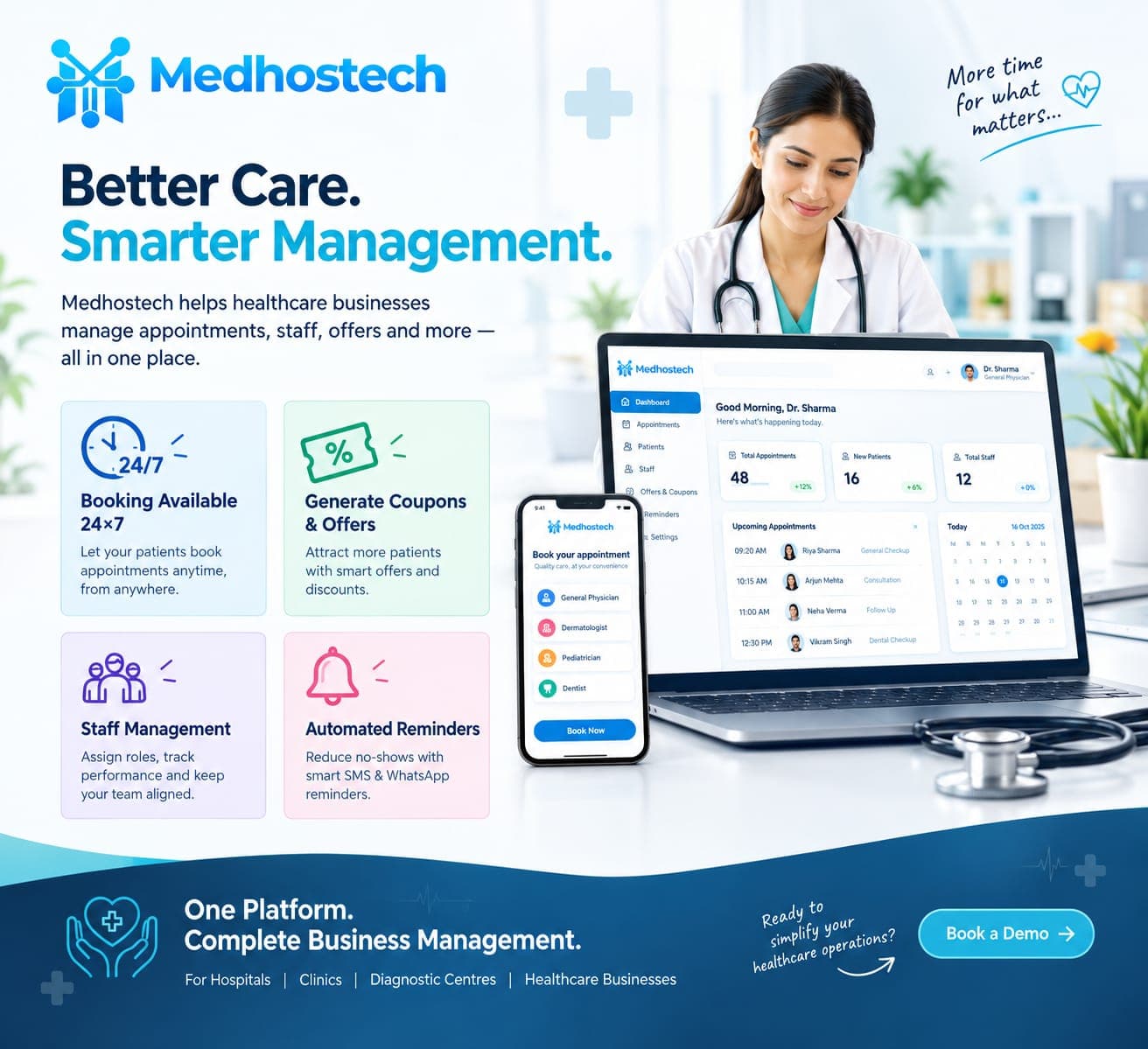
Medhostech offers digital management solutions designed to help businesses organise their operations through centralised software capabilities. Healthcare providers looking to simplify their administrative processes can explore Medhostech's available features and assess whether they align with their operational requirements.
Frequently Asked Questions (FAQs)
1. Why is managing multiple hospital departments challenging?
Managing multiple departments can be challenging because each team handles different responsibilities, records and workflows. Disconnected systems and manual processes can create communication gaps and administrative delays.
2. How does digital healthcare improve hospital management?
Digital healthcare helps hospitals organise information, simplify administrative processes, improve access to records and coordinate different departments through technology-driven solutions.
3. What is the role of clinic management software in the USA?
Clinic management software helps healthcare facilities manage patient information, appointments, billing and administrative activities. The available features depend on the software provider.
4. How does billing software help hospitals?
Billing software helps healthcare organisations generate invoices, track payments, maintain financial records and organise billing activities more efficiently.
5. What is the difference between EMR software and hospital management software?
EMR software focuses primarily on maintaining electronic medical records, while hospital management software supports broader administrative operations such as billing, staff management and patient administration.
6. Can integrated software reduce hospital administrative workloads?
Yes. Integrated software can reduce repetitive data entry, connect relevant workflows and make information easier for authorised employees to access.
7. What should hospitals consider before choosing management software?
Hospitals should evaluate features, security, ease of use, integration capabilities, scalability, pricing and technical support before selecting a solution.
8. Is cloud-based healthcare management software suitable for hospitals?
Cloud-based solutions can provide flexible access to authorised users and support centralised operations. However, hospitals should evaluate data security, privacy, hosting arrangements and applicable regulatory requirements before adoption.
Conclusion
Managing multiple hospital departments is a complex responsibility, particularly when different teams depend on disconnected systems and manual administrative processes. From workforce management and financial administration to patient records and departmental coordination, every function needs an organised approach. Adopting suitable digital healthcare solutions can help hospitals simplify these responsibilities and improve operational visibility.
The right technology should not simply add another tool to an organisation. It should help connect important workflows, reduce unnecessary administrative effort and support long-term operational growth. Looking to simplify your healthcare business operations?
Explore Medhostech and discover how integrated digital management solutions can help organisations streamline administrative processes, manage teams and bring essential business operations together.