
How Digital Systems Reduce Administrative Work in UK Clinics
Discover how digital systems help UK clinics reduce administrative workloads, simplify staff management, organise patient records and improve daily healthcare operations through smarter technology.
Medhostech Editorial
Healthcare IT & software insights
Smarter Healthcare Management Starts With Less Paperwork and Better Workflows
Running a healthcare clinic involves much more than consulting patients. Behind every appointment, consultation and follow-up is a series of administrative tasks that keep the clinic functioning. From managing staff schedules and maintaining patient records to handling daily operations, administrative responsibilities can quickly become overwhelming.
For many healthcare providers in the UK, these tasks consume valuable time that could otherwise be spent improving patient experiences and supporting clinical teams.The challenge is not always a shortage of staff. Sometimes, it is the amount of time spent managing disconnected processes. This is where digital systems can make a meaningful difference.
By bringing essential operations into organised digital workflows, clinics can reduce repetitive tasks, improve coordination and manage their daily responsibilities more efficiently.
Why Are Administrative Workloads a Growing Challenge for UK Clinics?
Healthcare administration involves several activities that need constant attention. When these activities are handled manually or through separate systems, even simple tasks can become time-consuming.
For example, clinic administrators may need to:
Update patient information across multiple records.
Coordinate staff attendance, shifts and availability.
Manage appointment-related communication.
Maintain billing and payment information.
Prepare operational reports.
Track daily activities and administrative responsibilities.
When these processes are not properly connected, information becomes difficult to manage. Staff may spend additional time searching for records, following up on pending tasks or correcting avoidable errors.
For independent practices and growing private clinics, these challenges can affect both operational efficiency and the overall patient experience.
How Can Digital Systems Reduce Administrative Workloads?
Digital transformation does not mean replacing healthcare professionals with technology. It means giving them better tools to manage repetitive administrative responsibilities.
Here are five ways digital systems can support UK healthcare businesses.
1. Simplifying Daily Clinic Operations
Managing a clinic requires coordination between different departments and responsibilities. When information is scattered across spreadsheets, paper registers and separate applications, administrators may struggle to maintain a clear overview.
Using Clinic management software UK healthcare providers can organise essential operational activities through a centralised digital platform.
Depending on the system's capabilities, this can help clinics manage:
Patient information and administrative records.
Staff responsibilities and availability.
Daily operational activities.
Billing and payment records.
Management reports.
Having important information organised in one place reduces unnecessary coordination and makes daily administration easier to handle.
2. Making Employee Management More Efficient
Staff management is another area where healthcare administrators spend considerable time. Tracking attendance, managing shifts, monitoring employee information and coordinating responsibilities can become difficult as a clinic grows.
HRMs software UK healthcare businesses use can help streamline workforce administration by organising employee-related information and reducing dependence on manual registers.
A digital HR management system can support:
Employee attendance tracking.
Staff information management.
Shift and schedule coordination.
Leave management.
Workforce reporting.
Instead of repeatedly checking attendance sheets or collecting information from different departments, managers can access organised employee records and make better-informed operational decisions.
3. Improving Patient Record Management
Patient information needs to be accurate, organised and accessible to authorised healthcare professionals. Traditional record-keeping methods can make information retrieval difficult, particularly when clinics handle a growing number of patients.
EHR software UK healthcare providers use helps maintain electronic patient health records, supporting better organisation and access to clinical information.
Depending on the solution, EHR systems may support:
Electronic patient records.
Medical history documentation.
Clinical notes.
Treatment information.
Secure access to patient data.
An important distinction is that electronic health records focus on clinical information, while broader clinic management systems support administrative and operational activities.
When these systems work together effectively, healthcare teams can spend less time searching for information and more time focusing on their responsibilities.
4. Connecting Different Business Functions
Healthcare businesses do not operate through patient records alone. They also manage employees, finances, resources, reporting and other administrative activities.
Handling these functions separately can create information gaps and make management more complicated.
Healthcare ERP UK solutions can help bring different business functions into a more connected management environment.
For example, an integrated ERP system may support:
Human resource management.
Financial and billing administration.
Inventory and resource tracking.
Operational reporting.
Departmental coordination.
The biggest advantage is improved visibility. Management teams can understand different aspects of business operations without depending entirely on disconnected records and manual updates.
5. Reducing Repetitive Administrative Work
Not every administrative responsibility requires manual attention.
Digital systems can help standardise recurring activities, reduce duplicate data entry and make information easier to retrieve.
For example, instead of maintaining separate employee spreadsheets, a clinic can use a centralised employee management system. Similarly, digital records can make it easier to find previously entered information without repeatedly searching through paper files.
These improvements may seem small individually, but together they can make everyday administration considerably more manageable.
What Should UK Clinics Look for in Digital Management Software?
Choosing the right technology is an important decision for any healthcare business. A system should address actual operational problems rather than introduce unnecessary complexity.
Before investing in a digital solution, clinic owners and administrators should consider the following factors:
1. Centralised Information: Does the platform help organise important business information in one accessible environment?
2. Staff Management Capabilities: Can managers maintain employee records, monitor attendance and coordinate workforce activities?
3. Patient Information Management: Does the solution support the clinic's patient administration and record-keeping requirements?
4. Reporting and Visibility: Can management access useful information about daily operations and business performance?
5. Data Security: Does the provider explain its security measures, access controls, data protection responsibilities and relevant regulatory requirements?
6. Scalability: Can the software support the clinic as its team, patient base and operational requirements grow?
The right solution should simplify existing workflows and support the way a healthcare business actually operates.
How Does Medhostech Support Healthcare Business Management?
Managing a healthcare business requires coordination across multiple operational areas. Medhostech aims to make this process more organised through its SaaS-based business management platform.
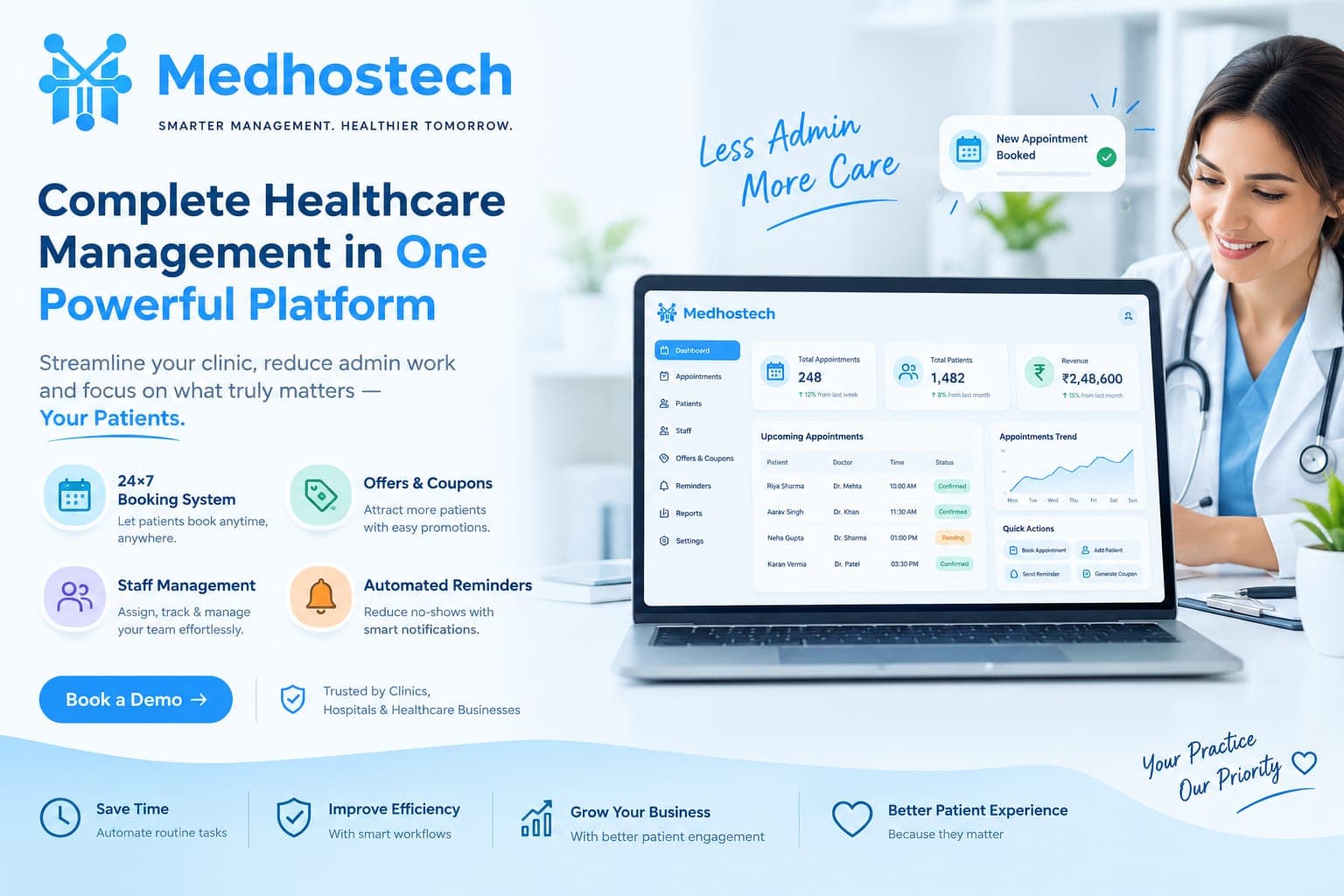
Rather than treating every administrative responsibility as a separate task, Medhostech provides a platform designed to support healthcare business operations through connected management capabilities. Its approach focuses on helping healthcare businesses manage essential activities, organise staff-related processes and improve operational visibility.
For clinics looking to move away from scattered administrative processes, a centralised management approach can be a useful step towards more organised daily operations.
Explore Medhostech: https://medhostech.com/
Frequently Asked Questions (FAQs)
1. How can digital systems reduce administrative work in UK clinics?
Digital systems help clinics organise patient information, employee records, billing activities and operational processes. By reducing repetitive manual tasks and improving access to information, they can make everyday administration more efficient.
2. What is the difference between clinic management software and EHR software?
Clinic management software focuses on administrative and operational activities, while Electronic Health Record (EHR) software primarily manages patients' clinical information and medical histories.
3. Why do healthcare businesses need HR management software?
HR management software helps organise employee information, attendance, leave records and workforce activities. It can reduce manual HR administration and improve staff management.
4. Can healthcare ERP software help manage multiple clinic operations?
Yes. Depending on its features, healthcare ERP software can connect functions such as finance, human resources, inventory and operational reporting, helping management teams maintain better business visibility.
5. What should private clinics consider before choosing management software in the UK?
Clinics should evaluate functionality, data security, usability, scalability, integration capabilities and compliance with applicable UK data protection and healthcare requirements.
Final Thoughts
Healthcare professionals should not have to spend most of their working day managing paperwork, chasing information or coordinating disconnected administrative processes.
Digital systems offer a practical way to bring structure to these responsibilities. From employee management and patient records to broader business operations, the right technology can help clinics work more efficiently.
For UK healthcare businesses, the next step towards better administration may not be hiring more people. It may be choosing smarter systems that help existing teams work better.