

How to Choose the Right Medspa Management Software in Texas, USA
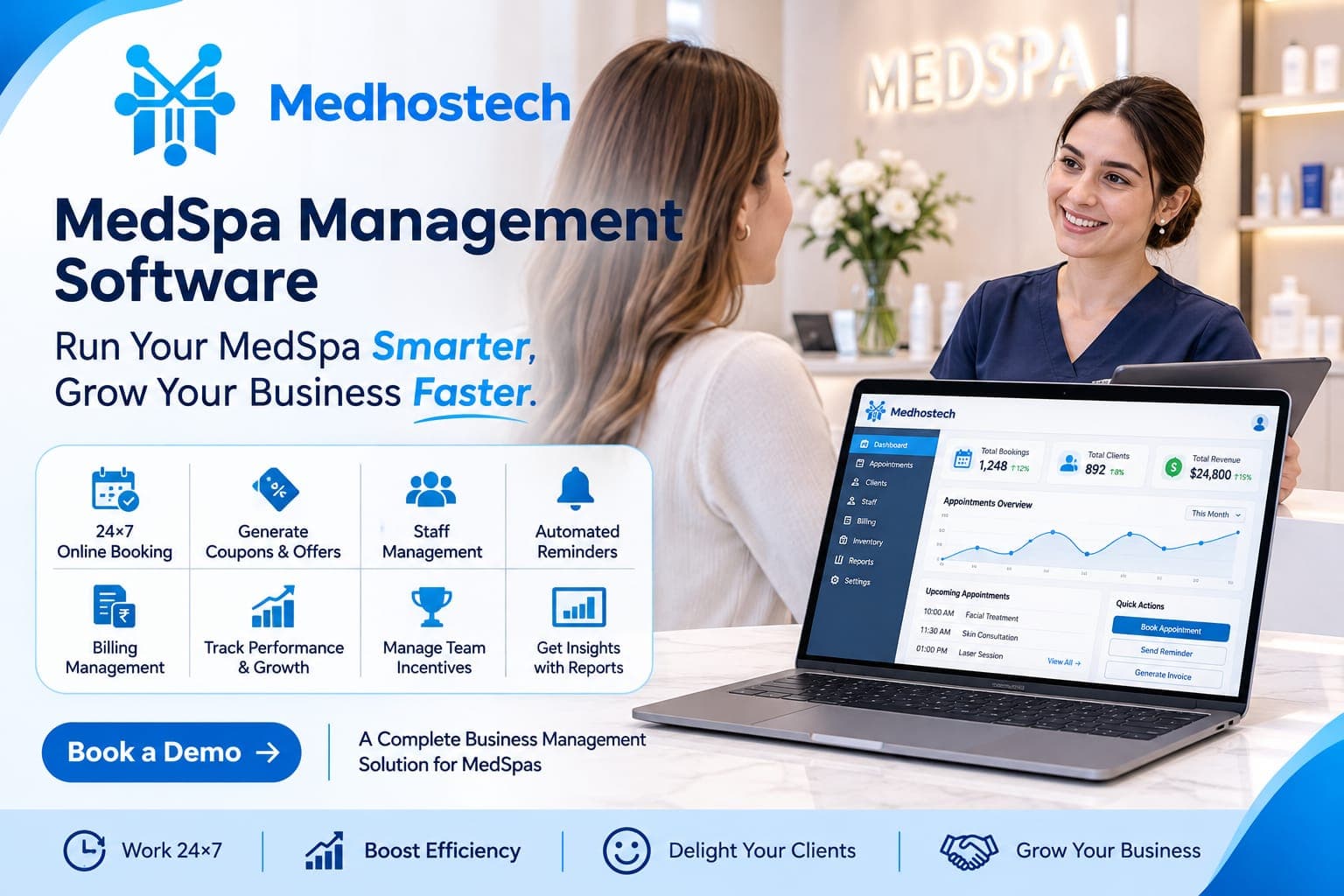
Discover how to choose the right medspa management software in Texas, USA. Learn about EHR, employee management, medical office software, billing, data security, and practice management features that help medspas improve daily operations.
Medhostech Editorial
Healthcare IT & software insights
How to Choose the Right Medspa Management Software in Texas
Running a medical spa in Texas involves more than offering aesthetic treatments and providing excellent customer service. Medspa owners must manage employees, patient information, appointments, treatment records, billing, and daily administrative operations. Handling all these responsibilities through separate tools can become time-consuming and complicated.
Choosing the right medspa management software in Texas can help simplify these processes, improve staff coordination, and support better patient experiences. But with several software solutions available, how do you identify the right one for your medical spa?
The best solution should bring essential business and clinical operations together while supporting security, efficiency, and future growth.
What Is Medspa Management Software?
Medspa management software is a digital platform designed to help medical spas manage their daily administrative and clinical operations from one system.
Depending on its features, it can help businesses manage:
Patient information and treatment records.
Appointment scheduling and reminders.
Employee attendance and staff management.
Billing, invoices, and payments.
Inventory and service management.
Business reports and performance tracking.
For Texas medspas, selecting software that supports both operational efficiency and appropriate healthcare compliance is particularly important.
1. Look for Comprehensive Medical Office Software
The first factor to consider is whether the platform can manage multiple business activities without requiring several disconnected applications.
Reliable medical office software should help organize administrative tasks, patient information, billing, and daily workflows.
Before choosing a platform, check whether it offers:
Centralized patient information.
Appointment and schedule management.
Digital billing and payment records.
Staff management features.
Reporting and analytics.
Role-based access to sensitive information.
A centralized system can reduce repetitive administrative work and help employees access the information they need more efficiently.
2. Check EHR and Patient Record Management Features
Electronic Health Records (EHR) are an important consideration for medical spas that maintain clinical patient records.
An EHR system helps authorized healthcare professionals document relevant patient information, treatment histories, clinical notes, and other healthcare records.
When evaluating software, consider whether it provides:
Secure electronic patient records.
Treatment history management.
Clinical documentation.
Authorized user access.
Record updates and retrieval.
Appropriate data protection measures.
Not every medspa management platform includes a full EHR system. Therefore, confirm whether the software provides built-in EHR capabilities or integrates with an existing EHR solution.
Texas medspa owners should also evaluate whether their chosen platform supports applicable HIPAA privacy and security requirements when handling protected health information. According to the HHS guidelines on HIPAA and cloud computing, healthcare organizations must consider appropriate safeguards when using cloud services.
3. Choose the Best Employee Management Software
Employees play an important role in the daily operations of a medical spa. Managing practitioners, receptionists, administrative staff, and other team members can become challenging without an organized system.
The best employee management software should help medspa owners manage staff activities and improve workplace coordination.
Important features to look for include:
Employee profiles and records.
Attendance and working hours.
Shift and schedule management.
Leave and absence tracking.
Role-based permissions.
Employee performance reports.
These features can help management understand staff availability, distribute responsibilities, and maintain better operational control.
For growing medspas in Texas, employee management capabilities can be especially useful when coordinating multiple practitioners or locations.
4. Evaluate the Practice Management Program
A reliable practice management program should make everyday administrative activities easier to manage.
It should help connect different workflows, allowing staff to coordinate appointments, billing, patient communication, and other operational responsibilities.
Look for features such as:
Appointment management: Organize schedules and reduce appointment conflicts.
Billing management: Generate invoices, maintain payment records, and track outstanding balances.
Patient communication: Support appointment reminders and relevant notifications.
Reporting: Review business performance, revenue, and operational activities.
Workflow automation: Reduce repetitive manual tasks and improve staff productivity.
The right practice management solution should simplify everyday work rather than introduce additional complexity.
5. Prioritize Data Security and Compliance in Texas
Security should be a major consideration when selecting medical clinic software.
Medspas may handle sensitive patient information, including personal details and clinical records. Therefore, software providers should explain how they protect and manage this information.
Before purchasing a solution, check for:
Encryption and secure data storage.
Role-based access controls.
Audit logs and activity tracking.
Regular data backups.
Secure data transmission.
Appropriate HIPAA safeguards and contractual arrangements, including a Business Associate Agreement (BAA) where required.
Remember that purchasing HIPAA-oriented software alone does not make a medspa compliant. The business must also follow applicable privacy, security, and operational requirements.
Texas medspa owners should additionally understand applicable state healthcare regulations and privacy requirements. They can refer to Texas Health and Human Services for information about HIPAA and privacy laws.
6. Consider Ease of Use, Integration, and Scalability
Even feature-rich medical clinic software may not deliver good results if employees find it difficult to use.
Choose a platform with a simple interface, clear navigation, and accessible customer support.
Also evaluate:
Integration: Can it connect with existing EHR, accounting, or payment systems?
Scalability: Can it support additional employees, services, or locations?
Cloud accessibility: Can authorized users access the platform securely from different locations?
Training: Does the provider offer onboarding and technical assistance?
Pricing: Are setup fees, subscription costs, and additional charges clearly explained?
Selecting scalable software can help avoid the inconvenience of changing platforms as your medspa expands.
How to Compare Medspa Management Software Before Buying
Before making a final decision, create a comparison of potential software providers.
Consider the following factors:
Evaluation Factor What to check
Employee management Attendance, shifts, leave, and staff records
EHR capabilities Patient records and clinical documentation
Billing Invoices and payment tracking
Security HIPAA safeguards and access controls
Integrations Compatibility with existing systems
Support Training and customer assistance
Scalability Support for business growth
Frequently Asked Questions (FAQs)
1. What is the best medspa management software in Texas?
The best medspa management software is one that meets your business requirements, supports secure patient information management, simplifies employee administration, and provides reliable billing and reporting features. The right choice depends on your medspa's size, services, and operational needs.
2. Does a medspa need EHR software?
Medspas that create and maintain electronic clinical patient records may need an appropriate EHR solution. The system should support secure documentation, authorized access, and applicable healthcare privacy requirements.
3. What features should medical office software include?
Medical office software should ideally include patient record management, appointment scheduling, billing, employee management, reporting, and secure data access. Specific requirements depend on the services offered by the medical practice.
4. How does employee management software help medspas?
Employee management software helps organize attendance, working hours, staff schedules, leave records, and employee information. It can reduce manual administrative work and improve workforce coordination.
5. Is cloud-based medical clinic software suitable for Texas medspas?
Yes. Cloud-based software can provide secure access to business information from different locations, depending on its security configuration and user permissions. Medspas should evaluate the provider's data protection practices and compliance capabilities before selecting a platform.
6. How much does medspa management software cost?
The cost varies depending on the provider, number of users, features, integrations, and subscription model. Medspa owners should compare total costs, including setup, training, support, and additional services, before making a decision.
Conclusion
Choosing the right medspa management software in Texas requires careful consideration of employee management, patient records, billing, security, and business operations.
A suitable platform can help reduce administrative workloads, improve staff coordination, organize patient information, and support long-term business growth.
Instead of choosing software based only on its price or number of features, focus on how effectively it addresses your medspa's everyday challenges. The right technology should make operations simpler, support better decision-making, and allow your team to concentrate more on delivering quality patient care.
Explore Medhostech and make your medspa operations more organized and efficient.