
Multimodal AI in US Healthcare: Smarter Diagnosis in 2026
Discover how multimodal AI combines medical images, EHRs, clinical notes and patient data to support smarter diagnosis and healthcare workflows in the US.
Medhostech Editorial
Healthcare IT & software insights
Introduction: Healthcare Is Moving Beyond Single-Source Medical Data
Healthcare generates enormous amounts of information every day. Medical images, laboratory reports, clinical notes, patient histories and electronic health records all provide valuable insights into a person's health.
However, these records often exist in different formats and systems, making it challenging for healthcare professionals to understand the complete picture.
This is where Multimodal AI in healthcare is creating new opportunities.
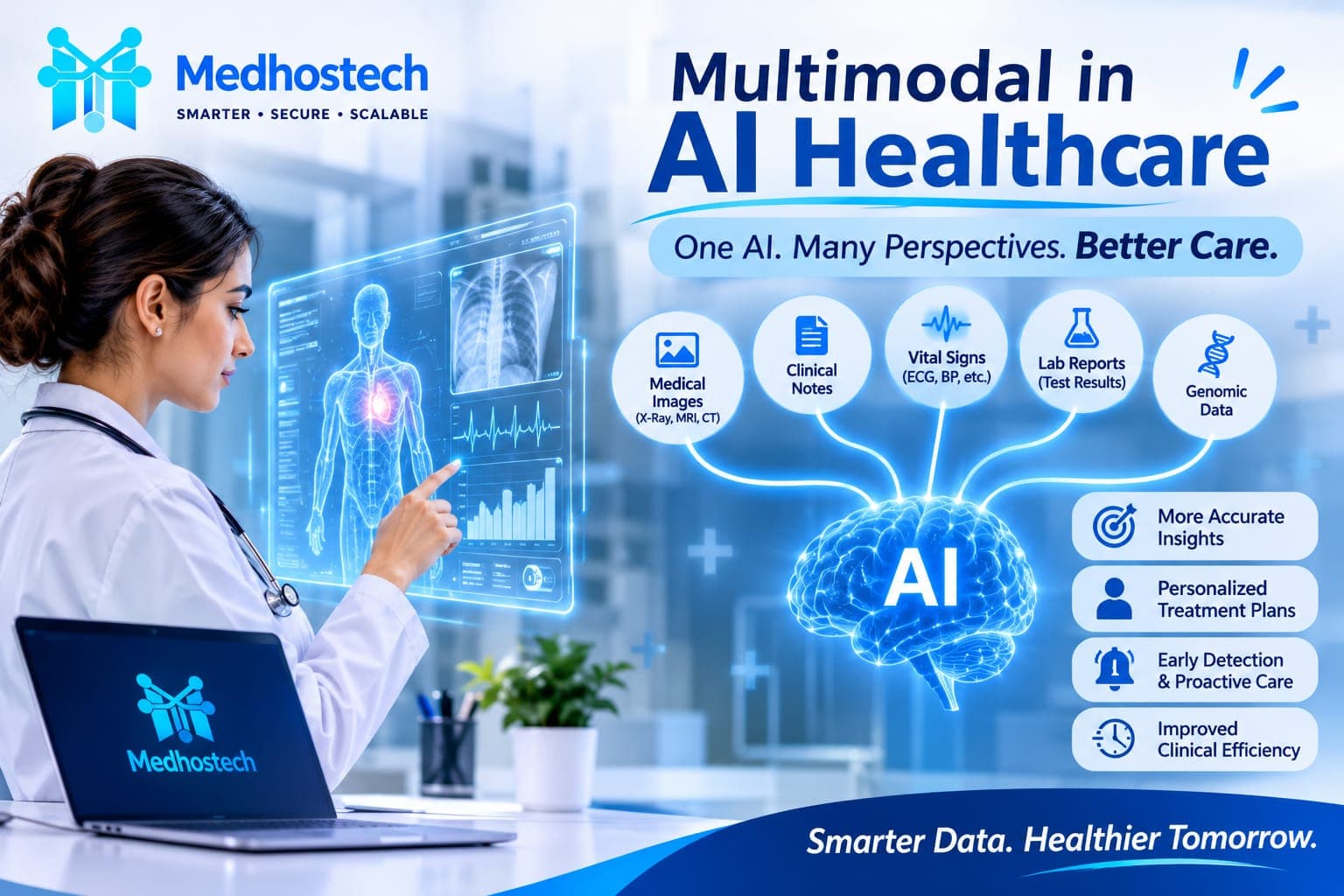
Unlike traditional AI systems that work with one type of information, multimodal AI can process and connect multiple data formats, including images, text and structured patient information.
In 2026, this technology is gaining attention across the US healthcare industry for its potential to support clinical analysis, improve information management and assist healthcare professionals in making informed decisions.
What Is Multimodal AI in Healthcare?
Multimodal AI is a form of artificial intelligence that processes different types of information together rather than analysing each data source independently.
For example, a healthcare professional may need to review:
An X-ray or MRI scan.
A patient's previous medical history.
Laboratory test results.
Clinical consultation notes.
Current medications and treatment records.
Multimodal AI can help analyse relationships between these different information sources and present relevant insights.
The goal is not to replace doctors. It is to help healthcare professionals access and interpret complex medical information more efficiently.
A 2026 study published in npj Health Systems demonstrated the feasibility of combining structured electronic health records with clinical text for predictive healthcare tasks.
Nature+1
5 Ways Multimodal AI Is Transforming US Healthcare
1. Smarter Medical Imaging and Analysis
Medical imaging plays an important role in identifying and monitoring various health conditions.
AI systems can analyse X-rays, CT scans, MRIs and other medical images. When combined with patient history and clinical notes, this information can provide additional context for healthcare professionals.
For example, a radiology team may review an imaging result alongside previous reports and relevant patient information.
This approach can support a more comprehensive review, although final interpretations must remain under qualified medical supervision.
2. Better Integration of Electronic Health Records
Patient information is often spread across different departments and healthcare systems.
EHR software for clinics helps organise important information such as:
Patient demographics and medical history.
Diagnoses and treatment records.
Laboratory results.
Medication information.
Consultation documentation.
When AI tools can securely work with relevant EHR information, they may help healthcare teams identify patterns, summarise records and retrieve clinically relevant details.
This makes connected and well-organised patient information increasingly important for modern healthcare providers.
3. New Opportunities for Cosmetic Clinics in the US
The potential of multimodal AI extends beyond hospitals.
Cosmetic clinics in US can also benefit from developments in AI-powered healthcare technology, particularly in dermatology and aesthetic medicine. Consider a cosmetic clinic evaluating a patient's skin concerns.
A clinician may review several information sources:
Skin images and visual assessments.
Previous consultation notes.
Patient medical history.
Treatment history.
Relevant laboratory information, when clinically indicated.
AI tools may help organise and analyse these different sources to support clinician-led assessments and treatment planning. For example, comparing skin images over time may help practitioners monitor visible changes during a treatment journey.
However, AI-generated findings should not independently determine diagnoses or treatment suitability.
4. AI-Powered Clinical Decision Support
One of the most promising applications is AI-powered clinical decision support. These systems can help healthcare professionals review relevant patient information, identify potential patterns and access useful clinical insights.
For example, an AI system might highlight a relevant medication history or flag information that deserves further clinical review.
In the US, the FDA issued updated Clinical Decision Support Software guidance in January 2026, clarifying how certain software functions are treated under medical device regulations.
FDA+1
This highlights an important point: healthcare AI must be developed and implemented with attention to safety, intended use and regulatory requirements.
5. More Connected Healthcare Management
AI innovation is valuable, but healthcare providers also need reliable systems to manage their everyday operations. This is where integrated healthcare technology becomes important.
Choosing the best healthcare management software involves looking beyond individual features.
Clinics should consider solutions that help organise:
Patient records and clinical documentation.
Appointment and staff workflows.
Billing and payment information.
Reporting and operational performance.
Secure access to relevant business information.
When healthcare management systems are properly integrated, clinics can reduce fragmented workflows and improve coordination between administrative and clinical teams.
Challenges of Implementing Multimodal AI in US Healthcare
Despite its potential, implementing multimodal AI comes with important challenges.
Patient data privacy: Healthcare organisations must protect sensitive patient information and follow applicable HIPAA requirements.
Data compatibility: Different healthcare systems may store information in different formats, making integration difficult.
Accuracy and reliability: AI-generated insights require proper validation. Incorrect or incomplete information can affect clinical decisions.
Human supervision: AI should support qualified healthcare professionals, not independently replace clinical judgement.
Regulatory compliance: Healthcare organisations must understand applicable FDA requirements when implementing AI software for clinical purposes.
The FDA's 2026 guidance and regulatory discussions around generative AI-enabled medical devices demonstrate why responsible implementation is essential.
FDA+2
How Healthcare Software Supports the Future of AI
Multimodal AI is only one part of healthcare's digital transformation.
Clinics also need dependable software to manage patient information, billing, staff activities and daily administrative workflows.
Modern healthcare management platforms can bring these operations together in a more organised environment.
At Medhostech, we believe healthcare technology should simplify everyday clinic operations and help healthcare providers build more connected digital workflows.
Our vision is to make healthcare management smarter through integrated technology and practical software solutions.
Build. Automate. Grow.
Frequently Asked Questions (FAQs)
1. What is multimodal AI in healthcare?
Multimodal AI in healthcare is artificial intelligence that analyses different types of medical information, such as images, clinical notes, laboratory results and patient records, together to support healthcare professionals.
2. How can multimodal AI improve medical diagnosis?
It can help healthcare professionals connect information from multiple sources, identify relevant patterns and review patient information more comprehensively. Clinical decisions still require qualified medical supervision.
3. Can cosmetic clinics in the US use multimodal AI?
Yes. Cosmetic and dermatology clinics can explore AI applications for skin-image analysis, patient history review and treatment progress monitoring, subject to appropriate clinical validation, privacy safeguards and regulatory requirements.
4. How does healthcare management software support AI integration?
Healthcare management software helps organise patient records, clinical documentation, billing and operational information. Well-integrated systems can provide a more organised data environment for compatible AI applications.
Conclusion: Building a Smarter Future for Healthcare
Multimodal AI represents an important development in the future of US healthcare. By connecting medical images, clinical notes, laboratory results and electronic health records, this technology offers new possibilities for clinical analysis, patient information management and healthcare workflows.
However, successful digital transformation requires more than adopting AI. It requires reliable software, connected systems, responsible data management and human expertise.
As healthcare continues to evolve in 2026, organisations that combine intelligent technology with efficient management systems will be better positioned to adapt to changing industry needs.
The future of healthcare isn't just about collecting more data. It's about making that data more meaningful.