
What Is the Best Healthcare Management Software in the UK?
Discover how healthcare management software helps UK hospitals and clinics streamline daily operations with EHR, CRM, cloud-based technology, and project management tools.
Medhostech Editorial
Healthcare IT & software insights
What Is the Best Healthcare Management Software in the UK?
The UK healthcare industry is continuously evolving, with hospitals, private clinics, and healthcare providers adopting digital solutions to improve their daily operations. Managing patient records, staff schedules, billing, communication, and administrative responsibilities can become challenging when different departments rely on separate systems.
This is why healthcare management software has become an important part of modern healthcare administration.
But what is the best healthcare management software in the UK? The right solution should help healthcare organizations manage their operations efficiently, organize information, improve team coordination, and support better patient experiences.
In this blog, we will explore the essential features, benefits, and factors to consider when choosing healthcare management software for UK healthcare providers.
What Is Healthcare Management Software?
Healthcare management software is a digital platform that helps hospitals, medical clinics, and healthcare organizations manage their administrative and operational activities through a centralized system.
Instead of maintaining multiple tools for different tasks, healthcare providers can use integrated software to coordinate essential business processes.
Depending on the platform, healthcare management software may include:
Customer Relationship Management (CRM)
Staff and HR management
Billing and financial management
Project management tools
Patient information management
Reporting and analytics
These capabilities help healthcare organizations reduce manual administrative work and improve coordination between departments.
What Features Should the Best Healthcare Management Software in the UK Include?
Choosing healthcare software requires understanding your organization's operational needs. Here are five important features to consider.
1. Electronic Health Records (EHR)
Electronic Health Records help healthcare providers maintain patient information digitally instead of relying entirely on paper-based records. An EHR system can help authorized healthcare professionals organize relevant patient information, treatment histories, consultation notes, and other clinical records.
For UK healthcare organizations, it is important to choose an EHR solution that supports appropriate information governance, data protection, and interoperability requirements. A well-organized EHR system can make accessing relevant patient information easier and support better coordination among healthcare professionals.
2. Cloud-Based Accessibility
Cloud-based healthcare management software allows authorized users to access business information through an internet connection.
This can be particularly useful for healthcare organizations managing multiple departments, locations, or remote administrative teams.
Some important advantages include:
Remote accessibility: Access relevant information from different locations.
Scalability: Support changing organizational requirements.
Centralized management: Keep essential operational information organized.
Simplified maintenance: Receive software updates without managing extensive local infrastructure.
Team coordination: Help departments work with shared information.
However, healthcare providers should evaluate data security, backup policies, access controls, and UK GDPR compliance before selecting a cloud-based platform.
3. CRM for Healthcare Organizations
Customer Relationship Management (CRM) software helps healthcare organizations manage relationships and communication with patients, customers, and other stakeholders.
A healthcare CRM can support activities such as:
Managing patient and customer contact information.
Organizing communication records.
Tracking enquiries and follow-ups.
Supporting patient engagement activities.
Managing communication campaigns.
For private clinics and healthcare businesses, CRM functionality can help improve communication and maintain more organized relationships.
It is important to distinguish CRM functionality from clinical patient record management. A CRM should not replace an appropriate EHR system.
4. Project Management Tools
Healthcare organizations regularly manage multiple projects, including staff training, operational improvements, departmental activities, and technology implementation. A project management tool helps teams organize tasks, assign responsibilities, monitor deadlines, and track progress.
For example, a hospital administrator coordinating a new departmental workflow can use project management features to:
Assign tasks to employees.
Set project deadlines.
Monitor work progress.
Coordinate responsibilities.
Identify pending activities.
This improves team accountability and helps managers maintain better visibility into ongoing projects.
5. Staff and Administrative Management
Healthcare organizations depend on effective workforce coordination. Managing employee information, attendance, schedules, responsibilities, and administrative activities manually can create unnecessary workload.
Integrated staff management functionality helps administrators organize employee-related information and coordinate daily responsibilities. For growing healthcare organizations, combining staff management with other operational tools can reduce the need to switch between multiple systems.
Why Is Healthcare Management Software Important for UK Clinics and Hospitals?
Healthcare management software offers several operational advantages. Reduced administrative workload: Digital systems help minimize repetitive manual tasks and improve information organization.
Better team coordination: Centralized platforms help departments access relevant operational information. Improved information management: Digital records make organizing and retrieving information easier for authorized users.
Greater operational visibility: Reporting and analytics can help managers understand workflows and identify areas that need improvement. Support for business growth: Scalable software can accommodate changing organizational requirements as healthcare businesses expand.
However, software improves administrative processes; it does not automatically guarantee better clinical outcomes or regulatory compliance.
How to Choose the Right Healthcare Management Software in the UK?
Before investing in a healthcare management platform, consider the following factors:
Understand your requirements: Identify whether you need EHR, CRM, HRMS, billing, or project management capabilities.
Check data protection: Ensure the provider supports appropriate UK GDPR and information security requirements.
Evaluate usability: Choose software that employees can use without extensive technical knowledge.
Consider integration: Check whether the platform can work with your existing healthcare systems.
Review scalability: Make sure the software can support future business growth.
Request a demo: Test the platform before making a final decision.
The best healthcare management software is not necessarily the one with the most features. It is the one that fits your organization's actual operational needs.
How Medhostech Supports Smarter Healthcare Management
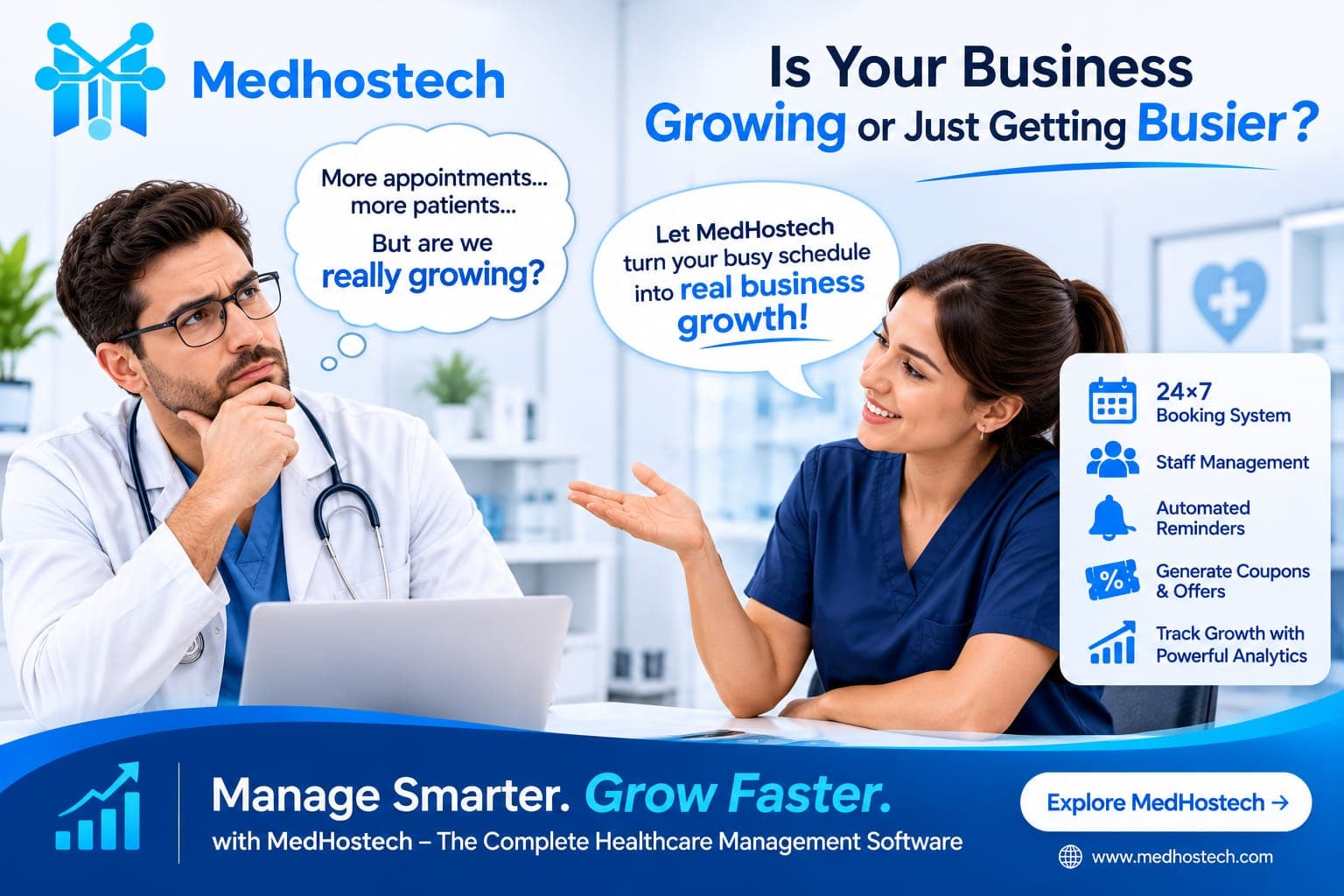
Managing a healthcare organization requires coordination across employees, administrative departments, customer relationships, and business operations. Medhostech offers SaaS-based digital management solutions designed to help businesses simplify their operational processes through centralized technology.
By bringing essential management capabilities together, Medhostech aims to help organizations improve workflow coordination, organize business activities, and reduce the complexity of managing multiple operations separately. For healthcare providers exploring digital transformation, an integrated management platform can be a valuable step towards more organized and efficient operations.
Frequently Asked Questions (FAQs)
1. What is the best healthcare management software in the UK?
The best healthcare management software depends on the organization's requirements. Look for essential features such as EHR, CRM, staff management, billing, cloud-based accessibility, and appropriate data protection capabilities.
2. Is cloud-based healthcare management software suitable for UK clinics?
Yes. Cloud-based solutions can help clinics access operational information remotely, manage multiple departments, and simplify software maintenance. However, providers should assess security and UK GDPR compliance.
3. What is the difference between EHR and CRM in healthcare software?
EHR systems manage clinical patient information, such as medical histories and treatment records. CRM systems focus on communication, customer relationships, enquiries, and engagement.
4. Why do healthcare organizations need project management tools?
Project management tools help healthcare teams assign responsibilities, organize tasks, monitor deadlines, and coordinate departmental projects more efficiently.
5. How does healthcare management software improve daily operations?
It centralizes important administrative activities, reduces repetitive manual work, improves information accessibility, and helps healthcare teams coordinate their responsibilities.
Conclusion
Choosing the best healthcare management software in the UK is an important step for healthcare organizations looking to simplify administration and improve operational efficiency. From EHR and CRM capabilities to cloud-based accessibility and project management tools, the right platform can help connect different business functions and create more organized workflows. Healthcare providers should prioritize usability, scalability, data protection, and integration when selecting a solution.
Medhostech is focused on making business management simpler through connected digital solutions.
Build. Automate. Grow.
Explore Medhostech's solutions at www.medhostech.com and take a step towards smarter business management.